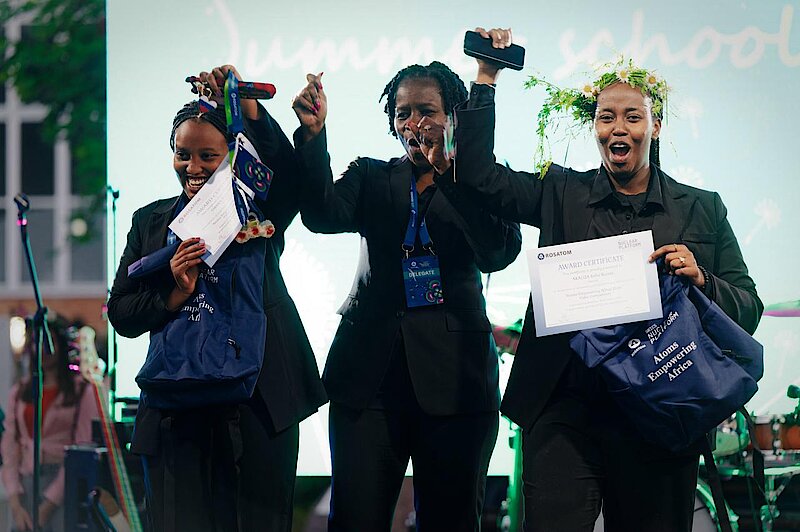
The competition invited young Africans between the ages of 18 and 35 to produce short videos demonstrating how nuclear technologies and international cooperation can help address pressing development challenges in their countries. The 2026 edition attracted participants from across the continent, with twelve winners selected from nine African countries: Rwanda, Egypt, Namibia, Ethiopia, South Africa, Tanzania, Kenya, Zambia, and Burundi.
As part of the prize, the winners were invited to participate in the Obninsk Tech Summer University 2026 in the Russian Federation—an advanced international training programme focused on technological leadership in the nuclear industry. The programme brought together outstanding young professionals and students from different countries to deepen their understanding of nuclear science, technology, safety, and international cooperation.
Envisioning Rwanda’s Nuclear Future
In their award-winning video, Uwera and Akaliza presented a vision of what Rwanda could look like with the integration of nuclear energy into its national development agenda. The video explored how collaboration through the BRICS Nuclear Platform could support the country’s long-term nuclear ambitions while highlighting the importance of public awareness and youth participation.
The project also featured NiCE Club Rwanda (Nuclear is Clean Energy), a student-led initiative at the University of Rwanda that provides a platform for students to learn about nuclear science, discuss emerging technologies, and contribute to conversations surrounding Rwanda’s clean energy future.
Commenting on the competition, Elsie Pule, Head Coordinator of the BRICS Nuclear Platform, noted that the submissions reflected "a strong and growing interest among young Africans in science, technology and sustainable development."
Reflecting on their motivation, the students explained that they wanted to demonstrate the role young people can play in Rwanda’s nuclear energy journey.
"We wanted to show what youth can actually do and how we are ready to support our government in the journey of developing the country’s first nuclear power plant. Beyond developing the technology itself, we believe the public must also understand what nuclear energy is and how it can benefit society. Young people have an important role to play because change comes from us, and we are ready to act, not to wait," said Fanny Uwera.
Their approach combined technical aspirations with community engagement by illustrating how nuclear energy could contribute to Rwanda’s future while showcasing initiatives that are already preparing the next generation of nuclear professionals and advocates.
International Learning Experience
Following their victory, the two students travelled to Russia to attend the Obninsk Tech Summer University 2026.
During the programme, they participated in academic sessions covering nuclear technology, technological leadership, regulatory frameworks, and the legal responsibilities associated with nuclear projects. They also visited the world’s first nuclear power plant in Obninsk and took part in practical simulation exercises that introduced participants to operational scenarios encountered in nuclear facilities.
The experience provided valuable exposure to international best practices while strengthening their understanding of the knowledge and skills required to support future nuclear programmes.



 By MANZI