By Geral Mpyisi, Founder and Chairman Gisabo Creative Industries
This is largely because Rwanda’s exports to the United States are relatively small, and Rwanda has already been operating under partial AGOA restrictions since 2018.
Let me explain the implications.
1. What exactly has the United States decided?
On 2 November 2026, the Trump administration announced its intention to terminate Rwanda’s and South Africa’s eligibility for AGOA benefits, effective 1 January 2027.
AGOA allows eligible African countries to export thousands of products to the United States without paying normal import duties.
According to the Office of the United States Trade Representative (USTR), the decision concerning Rwanda was based on concerns about:
* Barriers to American trade and investment.
* Rule of law and political pluralism.
* Internationally recognized workers’ rights and human rights.
* American national security and foreign policy interests.
These are the US government’s stated concerns, rather than independently established findings on every issue.
Importantly, this is not a complete trade embargo. Rwanda can continue exporting to the United States, but products that previously qualified for AGOA preferences may face normal US import tariffs.
2. How much trade does Rwanda conduct with the United States?
According to USTR, trade between Rwanda and the United States in 2025 was as follows:
Trade category Value (USD)
Rwanda’s goods exports to the US $43.3 million
Rwanda’s goods imports from the US $39.1 million
Total bilateral goods trade $82.4 million
Rwanda’s services exports to the US $95 million
Rwanda’s services imports from the US $156 million
Total goods and services trade $333.4 million
Source: US Trade Representative – Rwanda Trade Profile
These figures tell us something important.
Rwanda exported only $43.3 million worth of goods to the United States in 2025.
Furthermore, not all these goods benefited from AGOA. Some products already enter the US under other tariff arrangements.
Therefore, Rwanda will not lose $43.3 million in export revenue simply because it has been removed from AGOA.
The actual financial impact will depend on which exports currently benefit from AGOA, the tariffs applicable to those products and how American buyers respond.
3. Which sectors of Rwanda’s economy will be affected?
A. Coffee exports
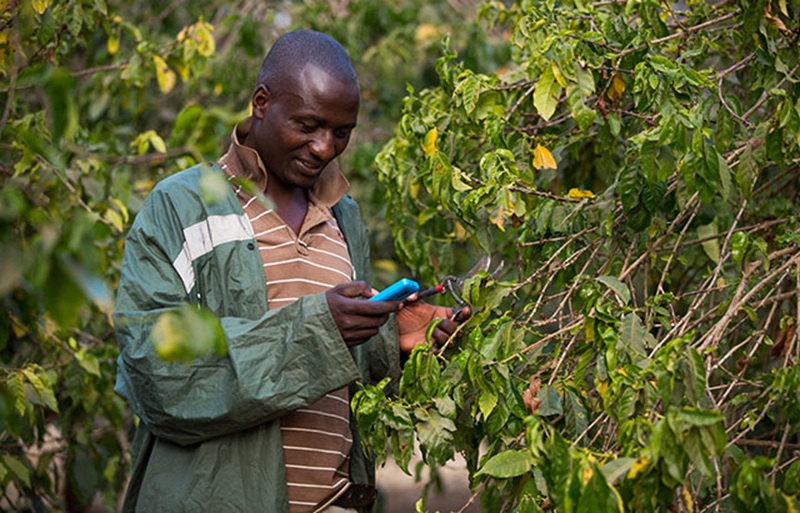
Coffee is one of Rwanda’s important agricultural exports.
The United States is a market for Rwandan specialty coffee, particularly high-quality Arabica coffee.
However, the removal of AGOA does not automatically mean that Rwandan coffee will face substantial new tariffs.
Many coffee products already benefit from low or zero ordinary US import duties.
Consequently, the direct impact on coffee exporters could be limited, depending on the particular products exported and applicable tariffs.
The more important consideration may be the broader deterioration in trade relations.
B. Minerals
Rwanda exports minerals, including tin, tantalum and tungsten products, to international markets.
Some mineral products may be affected by the withdrawal of preferential treatment, but the impact will depend on their tariff classification.
Many mineral products already have relatively low ordinary US tariff rates.
Therefore, the effect on mineral exports may be less substantial than the announcement initially suggests.
C. Textiles and garments
This is an interesting case.
In 2018, the United States suspended Rwanda’s AGOA benefits for apparel exports following a disagreement over Rwanda’s restrictions on imported secondhand clothing.
The US argued that Rwanda’s policy created barriers to American exports.
Rwanda’s policy was intended to support the development of its domestic textile and garment industry.
At that time, the US indicated that apparel exports affected by the suspension were worth approximately $1.5 million in 2017.
Therefore, Rwanda’s garment industry has already been operating without AGOA apparel preferences for more than eight years.
The new decision does not represent the loss of a major existing apparel benefit.
However, it could discourage future investment in garment manufacturing intended for the American market.
4. Impact on foreign direct investment
In my assessment, this is potentially more important than the immediate loss of tariff preferences.
Rwanda has positioned itself as an attractive investment destination through:
* Political and economic stability.
* Business-friendly reforms.
* Infrastructure development.
* Investment promotion.
* Regional market access.
* Development of manufacturing and service industries.
AGOA provided an additional incentive for foreign investors considering establishing export-oriented manufacturing operations in Rwanda.
For example, an international investor might consider building a factory in Rwanda to manufacture products for the American market.
Without AGOA, the investor may find another African country with preferential access more attractive.
This could affect investment in textiles, light manufacturing, food processing and other export-oriented industries.
However, the actual effect will depend on whether AGOA is renewed beyond December 2026, which countries remain eligible, and the relative costs of operating in Rwanda.
5. Impact on employment
The immediate employment impact is likely to be limited because Rwanda’s existing AGOA-dependent export base is relatively small.
Nevertheless, some exporters may experience reduced competitiveness.
Potential consequences include lower export orders, pressure on profit margins, reduced hiring and postponed investments.
The larger employment concern is the possible loss of future manufacturing opportunities.
For Rwanda, which needs to create productive employment for its growing young population, this matters.
However, there is currently insufficient evidence to estimate how many jobs might be lost because of the decision.
6. Impact on Rwanda’s economic growth
I would distinguish between the immediate and longer-term effects.
Economic indicator Likely impact
GDP growth Limited direct short-term effect
Export earnings Negative for products losing valuable tariff preferences
Foreign direct investment Potentially negative for US-oriented manufacturing
Employment Limited immediate impact, with longer-term risks
Foreign exchange earnings Some potential reduction
Coffee exports Likely limited direct tariff impact
Mineral exports Depends on product classification
Tourism No direct AGOA effect
Banking sector Limited direct effect
Rwanda-US relations Potentially significant diplomatic implications
These are qualitative assessments, not quantified forecasts.
The key consideration is that Rwanda’s economy is not heavily dependent on merchandise exports to the United States.
Consequently, the direct macroeconomic effect is unlikely to be substantial unless the trade decision becomes part of broader economic restrictions.
7. The diplomatic implications may be more serious
This is perhaps the most important aspect of the development.
The United States has not justified Rwanda’s removal solely on commercial grounds.
It has also cited national security, foreign policy, governance and human rights concerns.
The decision therefore needs to be understood within the broader relationship between Washington and Kigali.
Recent tensions have included the conflict in eastern Democratic Republic of Congo and allegations of Rwandan support for the M23 rebel movement, allegations Rwanda has denied.
Reuters reported that analysts connected the AGOA decision with these wider tensions.
There are three possible broader consequences.
First, investment confidence. American companies considering investments in Rwanda may become more cautious if they anticipate additional restrictions or diplomatic tensions.
Second, development cooperation. Although AGOA removal does not automatically affect American development assistance, prolonged diplomatic disagreements could influence future cooperation decisions.
Third, international perceptions. Some international investors may interpret the decision as evidence of increased political or regulatory risk.
These consequences are not inevitable, but they deserve attention.
8. What should Rwanda do?
I believe Rwanda should consider five economic responses.
a. Maintain diplomatic engagement with Washington
Rwanda should seek clarification of the specific requirements necessary to restore AGOA eligibility.
The US has indicated that countries can regain eligibility when they satisfy the relevant criteria.
It would be economically beneficial to keep the possibility of reinstatement open.
b. Accelerate export diversification
Rwanda should continue expanding its export markets beyond the United States.
Important opportunities include:
* The East African Community.
* The African Continental Free Trade Area (AfCFTA).
* The European Union.
* The Middle East.
* Asian markets.
Diversification would reduce dependence on preferential access granted by individual trading partners.
c. Strengthen domestic manufacturing
Rwanda should continue developing industries that can compete internationally without depending entirely on preferential tariffs.
This requires competitive energy costs, efficient transport and logistics, improved productivity, access to finance and skilled workers.
For a landlocked country, transport costs are particularly important.
d. Increase value addition
Rather than exporting primarily raw or minimally processed products, Rwanda could expand processing and manufacturing.
Examples include roasted and packaged coffee, processed agricultural products and selected mineral-processing activities.
However, such investments must be commercially viable and supported by reliable market demand.
e. Protect existing exporters
The government should identify companies currently benefiting from AGOA and establish:
* Their annual exports to the United States.
* The tariffs they will face after termination.
* The number of employees potentially affected.
* Their alternative export markets.
* Any temporary assistance justified by the economic impact.
This would allow Rwanda to respond based on actual exposure rather than assumptions.
9. Could Rwanda benefit indirectly from this development?
Possibly, although this would require deliberate economic adjustments.
The decision could encourage Rwanda to accelerate efforts to develop competitive industries rather than relying on preferential trade arrangements.
It could also strengthen the country’s motivation to expand intra-African trade under AfCFTA.
Rwanda has an opportunity to develop as a regional services, logistics and business hub.
However, losing trade preferences is not itself an economic advantage. Any benefits would arise from successful policy responses.
10. My overall economic assessment
I would summarize Rwanda’s situation as follows:
Short term (2027): The direct economic impact is likely to be relatively small. Rwanda’s merchandise exports to the United States are limited, and apparel benefits were already suspended in 2018.
Medium term (2027–2029): The main risks concern investment decisions, export competitiveness and missed opportunities for industrial development.
Long term: The implications will depend heavily on Rwanda’s diplomatic relationship with the United States, its ability to diversify exports and its success in developing internationally competitive industries.
One additional uncertainty is that AGOA itself is currently authorized only through 31 December 2026. Congress has been considering its future, so the practical consequences of Rwanda’s removal will also depend on whether and how the overall programme is extended.
Conclusion
The removal of Rwanda from AGOA is likely to be more significant as a diplomatic and investment signal than as an immediate economic shock.
Rwanda’s existing trade with the United States is simply too small for the loss of AGOA preferences alone to have a major effect on the national economy.



 By RWANDAPODIUM