RWANDAN AMBASSADOR: COLONIALISM DID NOT ONLY OCCUPY TERRITORIES BUT ALSO SHAPED INSTITUTIONS WHOSE IMPACT CONTINUES TODAY
“Colonialism was not limited solely to the occupation of territories; it also shaped institutions that influenced political power, social identities, economic relations, and mechanisms of discrimination in society. These structures continue to exert their influence in a number of former colonies even decades after the formal end of colonialism,” said Charles Kayonga, Ambassador of the Republic of Rwanda to Azerbaijan, during his speech at the international conference titled “Belgium’s Colonial Injustice and the 101-Year Path to Reparations,” held in Baku on August 21. By Azertac
 By MANZI
On Friday 21 August 2026
This article was viewed 2 times
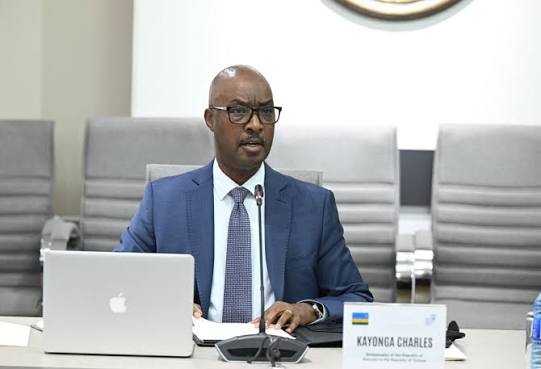
The ambassador stated that the impact of historical events on contemporary politics and future developments must be taken into account.
“Corrective justice serves both to eliminate historical harm and to build stronger and more solidarity-based relations between states and societies,” Kayonga noted.
He emphasized that studying the political experience related to colonialism is of particular importance for understanding its long-term consequences.
“Colonialism did not simply occupy territories. It created institutions that influenced the formation of political power, social identities, and economic organization, as well as determining who was included in processes and who was left out of society. Institutional structures continue, in a certain sense, in a number of former colonies to this day, and it is necessary to look more deeply into historical processes in order to eliminate their effects,” the ambassador added.
He noted that colonialism did not mechanically determine Rwanda’s subsequent political development, but it did influence the formation of the institutional and social framework within which later political actors operated.
“It is important to clearly reveal the nature of these structures and the long-term consequences they created. Only then is it possible to conduct a meaningful and well-grounded discussion around issues of historical responsibility, restoration of justice, and reparation,” Kayonga added.
News letter
Subscribe to view notification of our daily news